
My work experiences have taken me into different type of organizations that include technology, manufacturing, and not-for-profits. There is one common thread that I emphasized at each stop – enabling change success by upholding the human experience. People in the organizations I worked for characterized me as a dedicated and authentic people person who championed collaboration, flexibility, teamwork, enhanced skills for solving complex challenges.
The last stay of my journey lasted twelve years in a global manufacturing company with a technology slant. As a leader of the learning and change unit, I helped transform the organization (continued)
Click on ‘More’ button below to access full bio-brief.
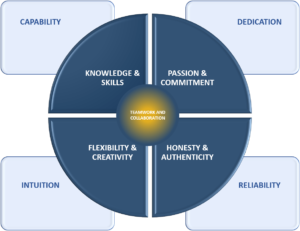
‘What’ I bring to the role of a consultant includes my expertise with the methods, tools, and functional abilities needed to help the organization develop the capability to respond to complex and unfamiliar challenges brought about by extreme uncertainty and change. The work I do is grounded in my education in the fields of Organizational Development, Learning and Development, and Change Management. Methods, frameworks, and tools however, by themselves, are not sufficient.
I have learned from experience that ‘how’ I conduct myself with each client – being curious, respectful, authentic, dedicated, reliable, and intuitive – is as important as, if not more important than, ‘what’ I bring to the situation. The ‘how’ and the ‘what’ are mutually dependent and richly complement one another bringing out the best in client-consultant interworking. Together, they provide the leverage much needed for project success.
My education and deep experience have equipped me to help put the pieces together when it comes to understanding and navigating the challenges brought about by change and uncertainty.
To download a copy of my resume, please click on the ‘Resume’ button below: